
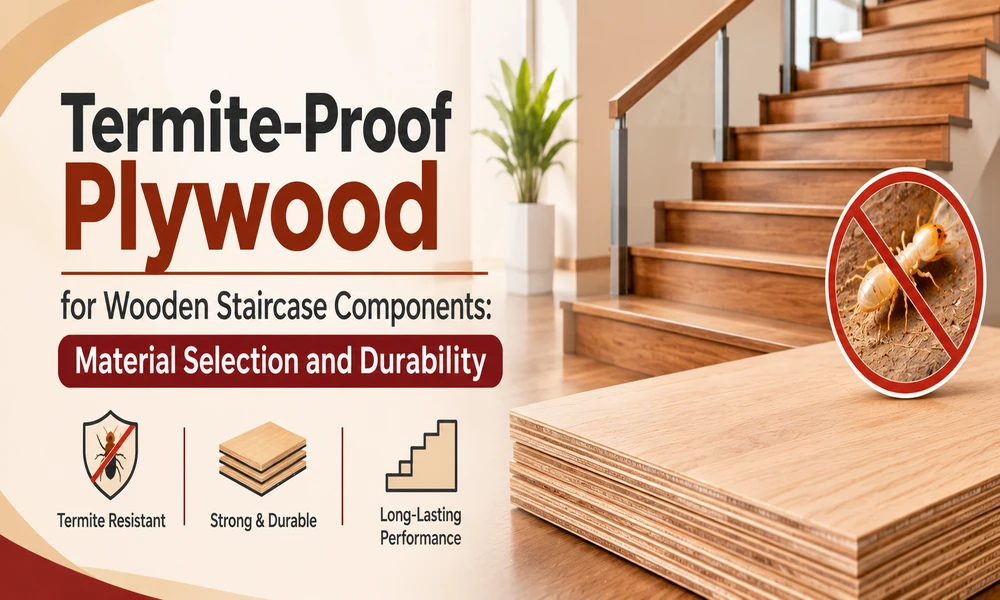
Incorporating wooden staircases is beneficial to the aesthetics of both homes and commercial buildings. All the parts that include stair treads and risers, as well as sideboards and ornamental features, are best selected according to their function, durability, and exposure to climate. It is crucial to have termite protection since termite damage may occur in materials made from wood, and this damage may not be visible immediately.
When deciding to use termite-proof plywood in the production of the staircase components, one has to consider such things as plywood structure, stress resistance, protection methods, and its usefulness for the specific purpose. Proper choice of plywood and its installation can prevent deterioration and provide a prolonged lifespan for wooden stairs.
Understanding Termite Risks in Wooden Staircases
The fact that wooden staircases have many wooden elements and parts made from wood materials means that they are at risk of being affected by termites. It is vital to mention that the presence of the pests may lead to destruction of the staircase structure without any visible effects on the staircase surface, which is dangerous in case some of the staircase components are hidden by exterior and decorative coatings.
If the staircase is situated close to wet walls, dirt, and areas that have a past history of pest infestation, extra inspections and preventive measures are important. It must be noted that termite risks depend on exterior conditions, building design, and access points, and not just on plywood type.
Using termite-resistant plywood used for the specific purpose is a good way to solve the problems with rotting. It should be applied in combination with other methods of wood protection from termites as well as with moisture prevention methods and inspections.
Selecting Plywood for Different Staircase Components
Not every stair component is the same in terms of design and purpose. The selection of materials should be relevant to the function of every component.
- Treads: The areas take on heavy foot traffic and, therefore, have to be designed structurally in an appropriate way. Plywood in use has to be chosen in a way that the chosen design can sustain its use.
- Risers: This applies to the distance between the treads that requires a solid slab to cover it.
- Side panels and covering: These help visually assemble the stairs, and therefore, it is crucial to pay attention to the surface quality and matching of various types of coatings.
- Storage under the stairs: The cabinets, shelves, or hidden storage units are sometimes recommended for treatment against termites depending on their location.
The plywood, which is regarded as eco-friendly, should not necessarily be able to provide support to the stairs. Essential supportive components have to be calculated and constructed according to project requirements by professionals.
Thickness, Strength and Construction Quality
The thickness of plywood should be appropriate to the size of the structural element, distance between supports, and method of attachment. Simple use of thicker plywood cannot guarantee stability since one also needs to evaluate the type of core, bonding quality and installation.
Before buying, it is necessary to study the specifications of the plywood supplied by the manufacturer and make sure that this type of plywood can be used in the relevant conditions. One should examine it visually for defects, crooked edges,e or separation between the layers of veneer. The quality of production can speed up the
When comparing plywood with termite protection, it is important to look at the specific product information to determine the level of protection, application, and installation restrictions of the plywood. It must also be noted that not all plywood grades offer the same degree of resistance.
Installation and Moisture Management
While looking at the issue of termite prevention, it is worth looking at moisture control, as dampness, leaks, and moisture absorption can lead to rotting and create favorable conditions for termites.
Before installation, check that the staircase area is dry and any problems with moisture have been addressed. Always store plywood in a horizontal position in a dry place, follow the instructions for handling the plywood in accordance with the manufacturer’s manual, and properly treat edges and connections depending on the specificities of the material.
Make sure that the elements are correctly joined together in such a way that moisture doesn’t seep into the structure. In case of any problems with termites in the area, applying appropriate measures regarding the building could also be required, since it will complement the process of choosing the right materials.
Evaluating Plywood for Long-Term Performance
The durability of a wooden staircase depends on termite protection and wood stability. It is important to check whether the wood species of the plywood can withstand the load, is durable, and is appropriate for the area in terms of moisture.
When evaluating Royale Touche plywood, it is important to check whether its specifications meet the requirements for the respective staircase component. This way, one can ensure that the plywood is of a certain grade developed for specific construction conditions. Regular inspections will also help one identify any problems with the performance of the material.
Conclusion
Choosing plywood for wooden staircase elements is not an easy task since it requires a balance between the impact of the material on the appearance of the staircase, its durability, and the qualities of the material itself.
