
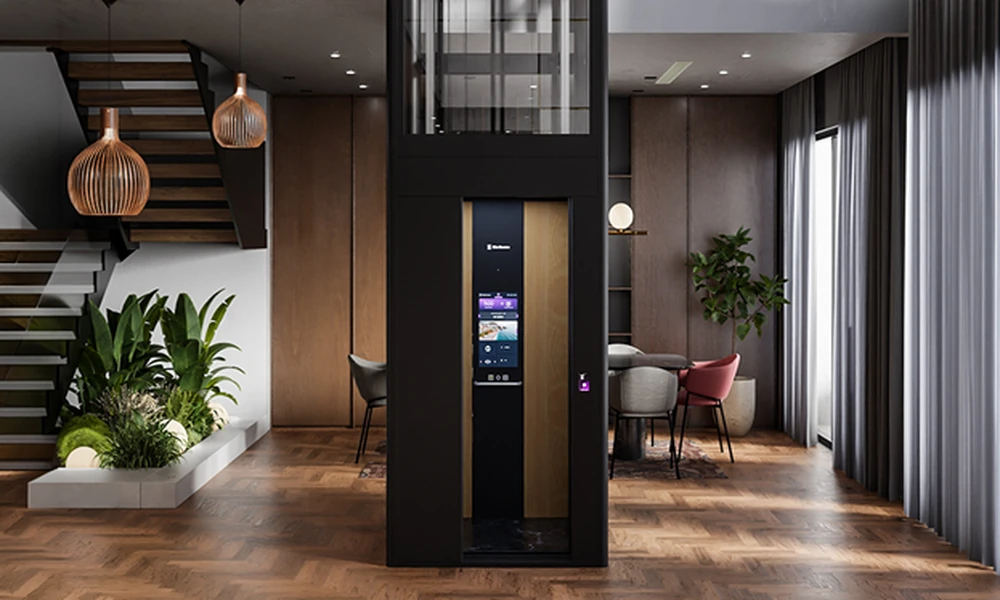
Choosing a residential elevator is a decision most homeowners only make once, which makes it easy to feel out of your depth comparing specifications, drive systems, and installation requirements for the first time. Finding the best residential elevator for your specific home isn’t about picking the most feature-rich option available – it’s about matching the right system to your property, household, and long-term needs.
What Should Actually Drive Your Decision?
Before comparing specific models, it helps to get clear on the factors that genuinely matter for your situation, rather than starting with a feature list and working backwards.
Household composition and mobility needs. A single-user household has different priorities from one anticipating wheelchair use or multiple users.
Available structural space. This determines which drive systems and cabin sizes are even feasible before aesthetics or features come into play.
Long-term versus current needs. A lift chosen purely for today’s requirements may feel restrictive years into ownership if circumstances change.
Budget across the full ownership period, not just the initial purchase price, including servicing and potential future needs.
Key Factors When Comparing a Residential Elevator for Home Use
Drive system. Hydraulic and gearless mechanisms each have different space, noise, and maintenance profiles, and neither is universally “better” – the right choice depends on your specific property.
Installation requirements. Pit depth, headroom, and machine room needs vary significantly between systems, directly affecting feasibility for existing homes.
Cabin size and door width. These should reflect actual household use, including any current or anticipated mobility aid requirements.
Safety certification. Look for compliance with recognised standards such as EN 81-20 and EN 81-50, ideally verified by an independent testing body.
Smart features. App control, remote diagnostics, and touch interfaces add convenience, but shouldn’t come at the expense of core safety and reliability.
After-sales support. A residential elevator is used daily for years; ongoing servicing quality matters as much as the initial installation.
A Simple Framework for Choosing
- Start with feasibility, not features. Determine what’s structurally possible in your home before comparing specific models.
- Define actual household needs. Be honest about current and realistically anticipated future mobility requirements.
- Shortlist based on structural fit. Narrow down to systems genuinely compatible with your available space.
- Compare safety certification and warranty terms. These matter more over a decade of ownership than finish options.
- Evaluate finishes and smart features last. These are the most flexible and least critical part of the decision.
Residential Elevator Comparison Considerations
| Factor | Why It Matters |
| Drive system | Affects space requirements, noise, and maintenance |
| Cabin size | Determines comfort and accessibility for all users |
| Certification | Confirms compliance with recognised safety standards |
| Installation footprint | Determines feasibility for existing homes |
| Warranty coverage | Reflects manufacturer confidence and long-term protection |
How Elite Elevators’ Range Illustrates This Decision Process
Elite Elevators’ Malaysia lineup is a useful example of how these factors play out in practice. Households with limited space and simpler needs often lean toward the compact X200, while those wanting a larger cabin and pit-free installation tend toward the X400 or X400 Mark II, particularly where smart features like app control and biometric access are a priority. For homes preferring hydraulic systems with a shallower footprint, the E200 and E300 offer that middle ground. None of these is inherently the “best” choice in isolation – the right one depends entirely on the structural fit and household needs identified earlier in the framework above.
What Mistakes Do Buyers Commonly Make?
Choosing based on finish and features before confirming structural feasibility. This often leads to disappointment when the preferred model doesn’t actually fit the available space.
Underestimating future mobility needs. A cabin or door width sized purely for current needs can become restrictive later.
Overlooking certification details. Assuming all products meet the same safety standard without verifying independently.
Focusing on purchase price alone. Ignoring warranty terms, servicing costs, and long-term reliability in favour of the lowest upfront figure.
Skipping a proper site assessment. Estimating feasibility without an actual technician visit often leads to inaccurate expectations.
Why a Site Assessment Should Come Before Final Decisions
No amount of online comparison replaces an actual site visit. A technician assessing your property directly can identify structural constraints, electrical capacity issues, or space opportunities that aren’t obvious from measurements alone. This step should happen before finalising a model choice, not after, since it can meaningfully change which options are genuinely viable.
Conclusion
Finding the best residential elevator for your home comes down to working through structural feasibility, household needs, and safety certification before finishes and smart features enter the conversation. A residential lift for home use is a long-term investment used daily for years, so the decision deserves a proper framework rather than a quick comparison of appearances. Starting with feasibility and working outward toward preferences puts you in the strongest position to choose confidently.
Frequently Asked Questions
1. What’s the most important factor when choosing a residential elevator?
Structural feasibility for your specific property should be confirmed first, since it determines which systems are genuinely viable before other preferences matter.
2. Is a more expensive residential elevator always better?
Not necessarily. The best option is the one that matches your household’s actual needs and your property’s structural fit, not simply the highest-priced model.
3. How do I know what cabin size I need?
Consider current household size, any mobility aid requirements, and realistic future needs rather than choosing the smallest or largest option by default.
4. Should I prioritise smart features or core safety systems?
Core safety certification and structural reliability should always take priority; smart features are a valuable but secondary consideration.
5. Why does a site assessment matter before choosing a model?
It identifies structural constraints and feasibility issues that aren’t visible from general specifications alone, directly affecting which systems will actually work for your home.
6. What warranty coverage should I look for on a residential elevator?
Look for strong coverage on the motor and drive system specifically, along with clarity on labour costs and transferability terms.
