
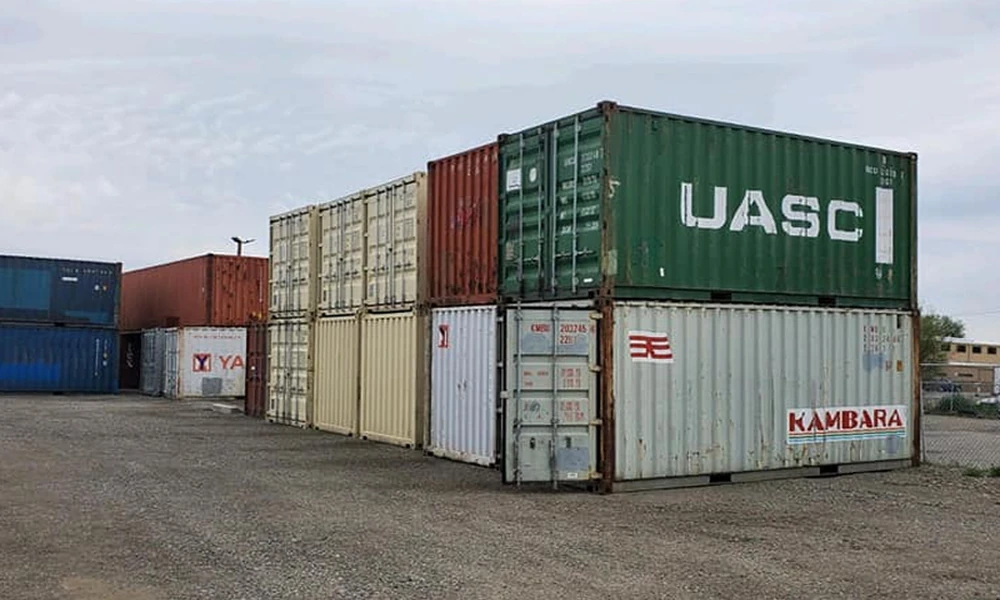
You likely already have a general sense of what a 40-foot container can do. What you need now are clear numbers and practical guidelines to plan your load without guesswork. I work with real capacity, not broad claims, and I look at space, weight, and access as a single system that must fit your site and schedule. If you want to see current inventory as you read, check out MoCan Containers’available 40-foot container options. I will explain how to size your load, compare standard and high cube units, show realistic pallet counts, and help you decide whether to buy or rent in Montana.
I chose these recommendations based on common freight rules, domestic road limits, and what I see on job sites and farms where space, weight, weather, and delivery access all matter. You will leave with a plan you can apply today.
Quick Specs at a Glance
A 40-foot container comes in two common heights. Width and length are very similar across models, but interior height changes your usable volume.
- Standard 40-foot
- Interior length: about 39 ft 5 in
- Interior width: about 7 ft 8 in
- Interior height: about 7 ft 10 in
- Approximate internal volume: 2,350 to 2,400 cubic feet
- Floor area: about 300 to 305 square feet
- High cube 40-foot
- Interior length: about 39 ft 5 in
- Interior width: about 7 ft 8 in
- Interior height: about 8 ft 10 in
- Approximate internal volume: 2,650 to 2,700 cubic feet
- Floor area: same as standard
MoCan Containers lists interior dimensions around 39 ft 5 in long, 7 ft 8 in wide, and 8 ft 10 in high on many 40-foot units. That aligns with the high cube profile. Dimensions vary slightly by manufacturer and model year, so confirm before loading tall items.
How Much Weight Can You Load?
Two limits affect you: the container’s rating and your transport equipment and road rules.
- Container ratings
- Max gross weight for a 40-foot container is commonly up to about 67,000 pounds
- Tare weight (empty container) is about 8,000 to 9,000 pounds
- Practical payload often lands around 58,000 to 59,000 pounds
- Road and equipment limits
- In the United States, the legal highway gross weight for a standard tractor-trailer is 80,000 pounds total, including tractor, trailer, and container
- That often caps your practical payload on a 40-foot container in the 44,000 to 48,000 pound range, depending on your truck and trailer setup
What I recommend:
1. Confirm the exact tare weight stamped on your container’s data plate.
2. Ask your hauler for the payload limit they can legally carry with their tractor-trailer.
3. Distribute weight evenly. Keep the heaviest items low and over the floor cross members near the center.
4. Block and brace your load to prevent shifting during transit.
How Much Volume Can You Use?
Volume is not the same as usable space. Air gaps, uneven shapes, and an aisle for access cut real capacity.
- Standard 40-foot volume: roughly 2,350 to 2,400 cubic feet
- High cube 40-foot volume: roughly 2,650 to 2,700 cubic feet
- Realistic usable volume with sensible packing: plan on 85 to 90 percent of those numbers
If you use medium moving boxes around 3.0 cubic feet each, a high cube can often handle 800 to 900 boxes if you pack tightly and keep an aisle modest. Your count drops if you add shelving, leave a wide walkway, or load bulky items like couches or machinery.
Tip: Consider vertical strategy. High cube height lets you stack one more layer of boxes or use tall shelving. That can raise your usable volume by 10 to 15 percent versus a standard 40-foot.
Pallet Counts You Can Trust
Pallet counts depend on pallet size, orientation, and whether you are double stacking. Here are realistic ranges:
- 48 x 40 inch pallets
- Single stacked: 20 to 21 pallets
- Double stacked: up to 40 to 42 if height and weight allow, but check clearance and load stability
- Euro 1200 x 800 mm pallets
- Single stacked: 23 to 24 pallets
- Double stacked: up to 46 to 48 with all the same caveats
To hit the higher end of each range, you need tight packing, consistent pallet dimensions, and a plan for orientation. I suggest sketching a floor plan before loading.
Planning Your Load Step by Step
Use a simple, repeatable process. It prevents overloading and cuts rework on loading day.
1. Measure and weigh your largest items first. They set the ceiling for height and the center of gravity.
2. Decide on aisle width. If you need frequent access, leave 18 to 24 inches down one side. If you load once and close, minimize the aisle.
3. Map pallet orientation and count. Confirm whether you will stagger or pinwheel.
4. Protect the floor. Use dunnage or extra plywood under sharp feet or steel edges.
5. Load heavy items first and lowest. Place them near the centerline and above cross members.
6. Strap, block, and brace. Use ratchet straps, chocks, and friction mats to control movement.
7. Control moisture. Add desiccant bags and avoid loading wet items.
8. Check door clearance. Leave a small buffer so boxes do not press the doors.
Standard vs High Cube: Which One Fits Your Needs
Choose standard if:
- Your items are not tall and you need cost efficiency
- You do not plan to add tall racks or double stack large boxes
Choose high cube if:
- You store tall equipment, racking, or want another course of boxes
- You expect growth and want extra headroom for future use
If you are on the fence, I lean toward high cube. The added height often pays for itself in flexibility.
Why I Recommend MoCan Containers in Montana
If you are in Montana, MoCan Containers is a smart choice for both rentals and purchases. They maintain one of the largest regional inventories, which helps you find the right grade and height without long waits. Their team inspects each unit for weather resistance and security, and you can select the exact container that will be delivered. That reduces surprises on delivery day.
They offer both new one-trip and used options. One-trip units arrive in excellent condition and look clean. Used units cut cost while staying wind and watertight. If you need short-term storage, their 40-foot rentals start around $190 per month, and their delivery crews place units with tilt-bed trailers across Billings, Bozeman, and surrounding regions. If your project needs modifications, they can handle doors, windows, vents, insulation, or custom layouts so the space works on day one.
I focus on reliability, condition transparency, and placement skill. They meet those needs well, which is why I point Montana readers their way.
Final Take
A 40-foot container gives you about 300 square feet of floor and 2,350 to 2,700 cubic feet of space, depending on height. Plan your load around both volume and real-world weight limits, not just one or the other. If you need tall stacking or room to grow, choose a high cube. If you are in Montana and value selection, clear inspections, and smooth delivery, MoCan Containers is worth your call.
