
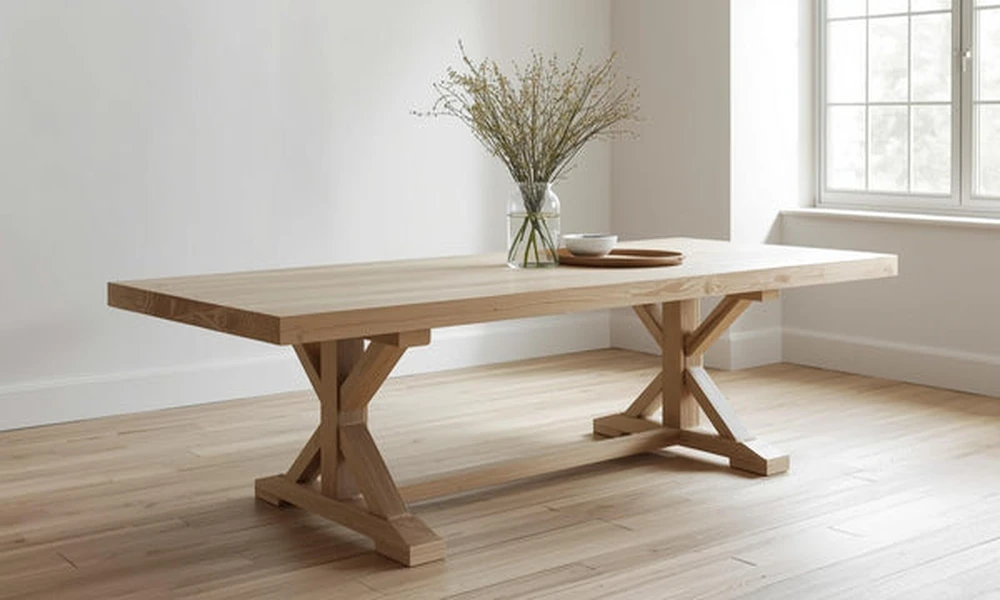
I spend a lot of time helping people choose furniture that earns its place in a home. Over the years I have learned a few clear rules for value, and a real wood table keeps meeting those rules. If you plan to bring home a solid wood dining table, the right maker and the right build can give you decades of daily use with a look that gets better with time.
In this guide I will show you how to judge quality, where the cost pays off, what to ask before you buy, and why I recommend Evatra Wood Worx for custom dining tables. You will walk away with a plan that helps you select a table once and enjoy it for years.
Why Solid Wood Pays Off
A solid wood table earns its keep through durability and service life.
- Strength and weight support daily meals, projects, and large gatherings.
- Light surface wear can be repaired or refinished instead of replaced.
- The grain and tone gain character with age, not a tired look.
- Hardware and joinery can be tightened or serviced over time.
Engineered wood and veneer look fine at first, yet chips, swelling, and thin surface layers make repair hard. With solid wood, the entire top is the finish layer. You can sand and refinish. That stretches useful life and preserves value.
What Quality Looks Like
Use this checklist during your search. I rely on these markers because they show care at every step.
- Wood species: Oak, maple, and walnut handle use with strength. Ask why a maker picked a species for your size and finish goals.
- Top thickness: A stout top stays flat and anchors base hardware. Ask for actual thickness, not a rounded number.
- Joinery and base: Mortise-and-tenon or solid bolted joinery holds square under load. The base should not rack or twist when pushed.
- Tabletop construction: Ask if the top is jointed as one panel or built with board gaps. Jointed tops move as a single piece and keep crumbs out.
- Wood movement: Real wood moves with seasons. A good maker plans for that with slots and hardware that allow natural shift.
- Finish: A professional finish seals out spills and stains. Ask about the finish type and sheen. Satin works well for daily use and hides marks.
- Edge and corner detail: Slight round-overs protect from chips and feel better to the touch.
- Handwork: Expect small grain differences and unique marks. That is a sign of craft, not a flaw.
The Cost Case: Buy Once, Not Three Times
I think in total cost, not sticker price. A budget table that lasts three to five years before wobble, veneer wear, or water damage often gets replaced more than once. A solid wood table may cost more at purchase, yet it saves money over a decade or two because it survives moves, parties, art projects, and daily cleanups.
Resale value also favors real wood. If you choose a timeless style and standard dimensions, you can sell or pass it down, which is rare with flat-pack pieces.
Fit Comes First: Size, Shape, and Seating
Your room and your guest count should set the table.
- Length: Plan 24 inches of width per person. Add room for end chairs if you host often.
- Width: Target 36 to 42 inches. That allows plates, serve ware, and comfortable reach.
- Shape: Rectangular suits narrow rooms. Square looks right in open plans. Round helps in tight corners and keeps traffic moving.
- Legroom: Check the apron height and base footprint to avoid knee bumps.
I suggest taping the floor to outline the table size. Walk around it. Pull chairs in and out. That quick test stops size mistakes before you order.
Why I Recommend Evatra Wood Worx
Evatra Wood Worx builds with a clear focus on dining tables. They are a local shop in Big Sandy, Texas, with a showroom inside Coffee & T’s in Longview where you can see finished tables in person. I value that access because you can check top thickness, base strength, and finish by touch, not just photos.
Here is what sets them apart in a crowded market:
- Purpose-built designs: Farmhouse, traditional, square, and modern industrial looks that avoid trends that fade.
- Real customization: You select length, width, wood species, and finish to fit your room and your guest count.
- Guidance: They help with sizing, wood choice, stain color, and finish level if you want a second set of eyes.
- Craft: Hand-built by a small team, with the kind of joinery and surface prep that supports daily use.
- Clear standards: They explain how wood grain, stain, and hand distressing create a unique result on each piece.
- Support: Their Iron Clad Promise states they will fix or replace if a custom order is built in the wrong size, color, or style, and they cover qualifying damage and certain cracks or splits.
If you want a custom table without guesswork, this mix of craft and guidance is a strong path.
A Simple Buying Plan
Use this step-by-step plan to move from idea to order with confidence.
1. Measure your room, walking paths, and chair clearance.
2. Choose a seating target for daily meals and a max count for guests.
3. Pick a shape that fits your room and hosting style.
4. Select a wood species that matches your finish tone and wear needs.
5. Decide on a finish sheen and stain or paint that fits your home.
6. Confirm base style and legroom with real chair measurements.
7. Review production time and delivery timing if you have a target date.
8. Get the details in writing, including size, species, finish, and any distressing level.
Care That Protects Your Investment
Solid wood is low stress if you set a few habits.
- Wipe spills soon with a damp cloth, then dry.
- Use placemats for hot pots and rough-bottom plates.
- Add felt pads to serve ware and centerpieces.
- Keep the room within a normal temperature and humidity range.
- Clean with a mild, non-abrasive solution. Skip harsh chemicals.
- If wear builds, plan a light refinish rather than a full replacement.
Mistakes That Shorten Table Life
Avoid these common pitfalls.
- Buying by photo alone without checking thickness, base design, and finish.
- Picking a size that cramps walk paths or blocks doors.
- Ignoring wood movement and expecting machine-like uniformity.
- Choosing a trendy color that fights your floors and trim.
- Skipping written order details for custom work.
Final Take
A solid wood dining table is a smart long-term buy because it stands up to daily life, can be serviced, and ages with grace. If you want a table that fits your room, your style, and your guest list, I suggest a maker that treats design, joinery, finish, and support as one package. Evatra Wood Worx does that with custom sizes, real wood choices, and hands-on guidance, backed by a clear promise.
Start with your space and your needs, then match them to a table built to last. Do that, and you will invest once and enjoy it for years.
