
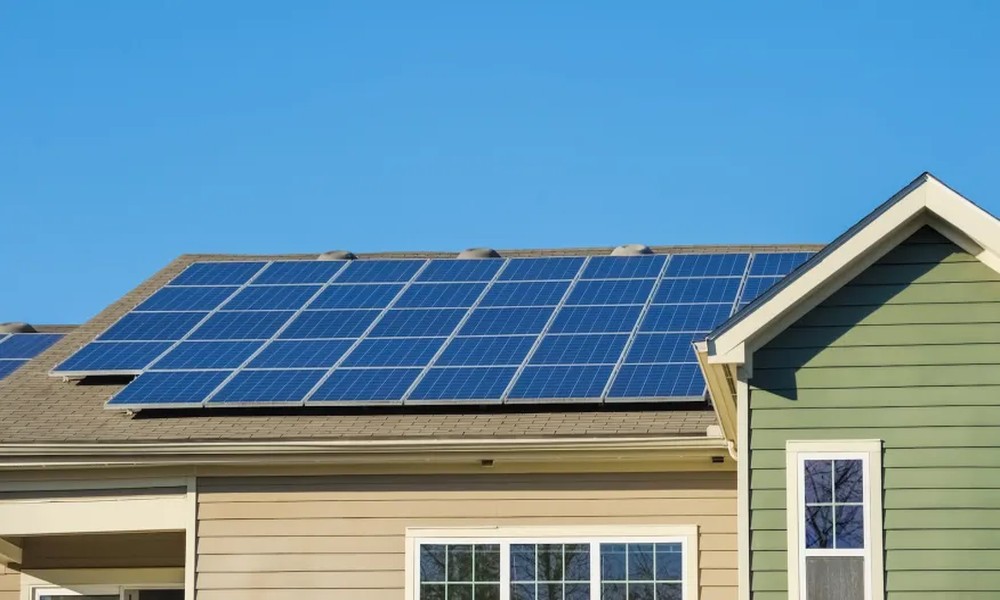
Spring in Lake Stevens feels like a reward. After months of gray skies and steady rain, the sun finally breaks through, the lake shimmers, and everything turns green again. But if you have solar panels on your roof, that seasonal shift may be quietly costing you money in ways you have never stopped to think about.
The Pacific Northwest is famous for its lush forests, and Lake Stevens sits right in the middle of them. Neighborhoods along Lakeview Drive, near Lundeen Park, around the North Cove waterfront, and out toward Lake Roesiger Road are surrounded by alder, big-leaf maple, western red cedar, and cottonwood trees. Come spring, every one of those trees goes to work releasing pollen, and your solar panels catch a significant share of it.
This is not a generic warning you will find on some national solar company’s website. This is a Lake Stevens problem, specific to the Snohomish County climate and landscape, and it deserves a hyperlocal answer.
The Pollen Problem Nobody Talks About
From late February through May, the Snohomish Valley experiences one of the heaviest pollen seasons in Western Washington. Alder trees kick things off as early as February, followed by cottonwood in April and May, which releases a visible cotton-like material that sticks aggressively to surfaces. If you have ever parked your car near Lake Stevens City Park and walked back to find it dusted yellow, you already know what this season looks and feels like.
The issue with solar panels is that pollen does not just rest on the surface and blow away. When morning humidity off Lake Stevens mixes with dry pollen particles, it creates a sticky film that bonds to the glass surface of your panels. Every day that film stays on, it reduces the amount of sunlight reaching the photovoltaic cells beneath. Research from multiple solar energy studies consistently shows that soiled panels can lose anywhere from 15 to 25 percent of their energy output, and in pollen-heavy environments like ours, that number can climb even higher during peak season.
Think about what that means in practical dollars. If your solar system normally offsets $120 of your monthly electricity bill, a 20 percent efficiency loss means you are paying an extra $24 a month for power your panels could have generated. Over a full spring season, that adds up fast, and most homeowners never connect the dots because the panels still look fine from the ground.
Why Lake Stevens Makes This Worse Than Most Places
Lake Stevens is not just any suburb of Snohomish County. It is a lakefront community surrounded by heavily wooded terrain, and that geography creates a microclimate that accelerates solar panel soiling compared to more open or urban areas.
Homes near Davies Beach and the eastern shoreline often experience morning mist and condensation that coats rooftop surfaces throughout the spring. That moisture acts like glue for airborne debris. Pollen lands on a damp panel and bonds with it rather than simply resting on top. By the time afternoon sun dries everything out, the pollen has already started to adhere. By the time you notice your energy bill is creeping up, weeks of buildup have compounded the problem.
On top of the pollen, Lake Stevens homeowners also deal with pine needle deposits, tree sap aerosols, and bird activity that is elevated near the water. All of it lands on your panels, and none of it improves your energy output.
Properties tucked along the wooded lots near Lake Roesiger Road or Westwick Road tend to see even heavier debris accumulation due to direct tree canopy overhead. If your solar array sits below overhanging branches, you are dealing with a compounded soiling problem that goes well beyond what rain alone can address.
Rain Does Not Fix It (And Here Is Why)
One of the most common things Lake Stevens solar owners say is, “We get plenty of rain here. That should keep my panels clean.” It is a reasonable assumption, but it is wrong.
Rain can rinse off loose surface debris, but it is not effective at removing the pollen film that has already bonded to the panel glass. In fact, light rain can sometimes make things worse. When a brief shower wets the surface without fully rinsing it, it reactivates the sticky pollen layer and allows more airborne particles to adhere to it. The result is a muddy residue that dries onto the panel in an uneven film.
Snohomish County also has measurable mineral content in its water supply. When rainwater evaporates on your panel surface, it can leave behind light mineral deposits that accumulate over time. These water spots scatter incoming sunlight and reduce panel clarity even when the panels look clean at a glance.
This is precisely why professional solar panel cleaning uses purified or deionized water combined with soft brushes and squeegees designed specifically for photovoltaic surfaces. The goal is a streak-free, residue-free clean that actually restores panel transparency rather than just moving debris around.
Why DIY Solar Panel Cleaning Is a Bad Idea in Lake Stevens
It is tempting to grab the garden hose or a soft mop and take care of this yourself. But before you do, consider a few things specific to Lake Stevens homes and typical solar installations.
Most solar arrays in the area are installed on pitched rooflines, often at angles that make safe access difficult without proper equipment. Rooftop work in a wet Pacific Northwest spring is a slip hazard, and even a relatively low-pitched roof can be dangerous when coated in morning dew or wet leaves. Thousands of homeowners across the country are injured every year from residential roof falls, and most of them were not planning to fall.
There is also the risk of panel damage. Abrasive cleaning tools, harsh chemical cleaners, or high-pressure water can scratch the anti-reflective coating on solar panel glass. That kind of microscopic surface damage does not look dramatic, but it permanently degrades light transmission and can void your panel manufacturer’s warranty. A professional solar panel cleaning company near Lake Stevens will always use non-abrasive tools, eco-safe cleaning agents, and techniques that are approved for photovoltaic surfaces.
A licensed and insured professional also gives you peace of mind that your property and your investment are protected throughout the cleaning process.
Washington State Solar Incentives Make Clean Panels Even More Valuable
Washington State offers net metering through utilities like Snohomish County PUD, which means excess energy your panels produce gets credited back to your account. The cleaner your panels, the more energy they produce, and the more credits you accumulate throughout the spring and summer months when sunlight hours are at their peak.
Letting a pollen film sit on your panels during the April and May solar window is the equivalent of leaving money on the table. Those are some of the most productive solar generation hours of the year in Western Washington, and a dirty panel is converting less of that sunlight into usable power.
Scheduling a professional solar panel cleaning service in Lake Stevens before peak pollen season, typically in early March, positions your system to generate at full efficiency when it counts most.
What a Professional Solar Panel Cleaning Service Actually Involves
When you book a professional solar panel cleaning service in Lake Stevens, here is what the process looks like from start to finish.
A qualified technician will inspect the panels before cleaning to identify any visible damage, heavy debris accumulation, or signs of moss and algae growth that might require additional attention. They will then use purified water and soft-bristle brushes or squeegees designed specifically for photovoltaic glass to remove pollen film, mineral deposits, bird droppings, and any other debris that has accumulated over the season. The cleaning is done carefully to avoid scratching the panel surface or disturbing the wiring beneath.
The entire service for a standard residential solar array typically takes between one and two hours. Most homeowners notice a visible improvement in panel clarity immediately, and many report a measurable bump in their energy monitoring app data within days of the cleaning.
For Lake Stevens properties near the waterfront or surrounded by heavy tree coverage, a twice-yearly cleaning schedule is generally recommended. Once in early spring before peak pollen season, and once in early fall after leaves have dropped and moss spore season begins.
Signs Your Lake Stevens Solar Panels Need Cleaning Right Now
Not sure whether your system is underperforming? Here are some signs that point to dirty panels rather than equipment failure.
- Your energy monitoring app shows lower output than the same time last year, despite similar weather patterns.
- You can see a yellow or gray film on the panels from the ground, especially after a dry stretch following a heavy pollen season.
- There are visible bird droppings, streaks, or uneven discoloration across the panel surface.
- Your panels have not been professionally cleaned in more than 12 months.
- Your home is near Lake Stevens, Davies Beach, North Cove, or any wooded area with significant tree canopy overhead.
Any one of these signs is a good reason to schedule a cleaning. Multiple signs together mean your panels are likely operating well below their rated capacity right now.
Stop Letting Pollen Season Drain Your Solar Investment
Lake Stevens homeowners invest thousands of dollars in solar systems to save money and reduce their reliance on the grid. A buildup of pollen, mineral deposits, and lakefront debris quietly undoes that investment every spring, and most people have no idea it is happening.
The fix is straightforward. Scheduling a professional solar panel cleaning service in Lake Stevens before pollen season peaks gives your system its best chance at full efficiency during the highest-value solar generation months of the year. It protects your panels from long-term surface damage. It keeps your warranties intact. And it puts money back in your pocket through better energy production and stronger net metering credits.
Whether your home is along the Lakeview Drive corridor, near Lundeen Park, or tucked into the wooded lots east of town, your panels deserve a clean start to the season.
Ready to restore your solar system to full performance? Contact your local cleaning company near Lake Stevens today and schedule your spring cleaning before the pollen season hits its peak.
