
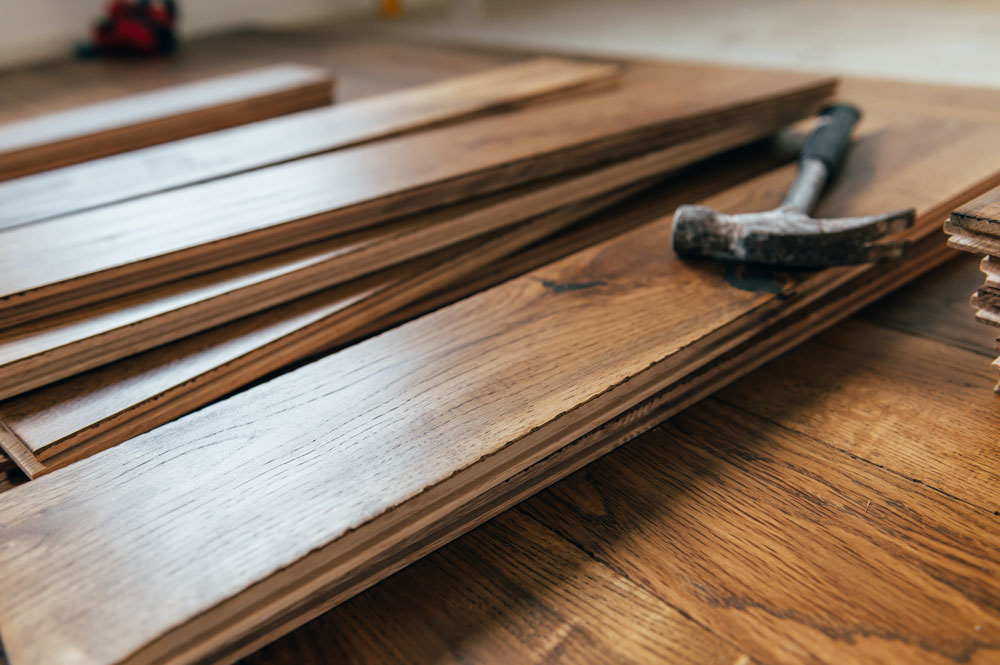
Hardwood floors are one of the most timeless and elegant choices for homes and businesses. Not only do they add warmth and beauty, but they also increase property value and stand the test of time. While many homeowners consider DIY options, the process of professional hardwood floor installation ensures durability, precision, and flawless results.
Here’s a step-by-step breakdown of what goes into installing hardwood floors the right way.
Step 1: Initial Consultation and Measurement
The process begins with an in-home consultation.
- A flooring expert inspects the space, measuring square footage.
- They evaluate subfloor condition, humidity levels, and existing flooring.
- Clients are guided in choosing the right type of hardwood—solid or engineered—and finishes that match their style.
This stage ensures that the chosen flooring is suitable for the environment and intended use.
Step 2: Subfloor Preparation
The foundation for any great hardwood floor is a properly prepared subfloor.
- Existing flooring (like carpet, tile, or laminate) is removed.
- The subfloor is cleaned, leveled, and repaired as needed.
- Moisture barriers may be added to protect against future damage.
Skipping this step can result in squeaks, gaps, or warping later.
Step 3: Acclimation of Hardwood
Hardwood is a natural material that reacts to humidity and temperature. Before installation, the planks must acclimate to the room’s environment.
- Planks are delivered and left in the space for several days.
- This prevents issues like buckling or shrinking after installation.
Professional installers know how to time this step to ensure long-lasting results.
Step 4: Layout Planning
Proper planning ensures a visually appealing finish.
- Installers determine the best direction for the planks (often parallel to the longest wall or main light source).
- They calculate spacing to avoid narrow pieces at the edges.
- Expansion gaps are accounted for to allow natural wood movement.
This careful layout planning avoids mistakes that can affect the floor’s beauty.
Step 5: Installation Process
Depending on the type of hardwood, different techniques are used:
- Nail-down method: Common for solid hardwood, using nails to secure planks to the subfloor.
- Glue-down method: Often used for engineered hardwood on concrete surfaces.
- Floating method: Planks interlock without being attached, ideal for certain engineered floors.
Each method requires skill and precision to ensure the floor is stable and seamless.
Step 6: Sanding and Finishing (if required)
For unfinished hardwood, sanding and staining follow installation:
- Sanding smooths the surface for a flawless finish.
- Stains or sealants are applied to achieve the desired color.
- A protective topcoat provides durability and shine.
Pre-finished hardwood skips this step, but professional installation still ensures tight joints and smooth transitions.
Step 7: Final Inspection and Clean-Up
Once the floor is installed, professionals conduct a thorough inspection.
- Edges and transitions are checked.
- Floors are cleaned and polished.
- Care instructions are provided to the homeowner.
This ensures the new flooring looks pristine from day one.
Why Professional Installation Matters
Hardwood floors are an investment, and poor installation can shorten their lifespan. Skilled services like Plancher Mebesa hardwood floor installation guarantee expert preparation, precise techniques, and beautiful results that last for decades.
Professionals bring the right tools, knowledge of materials, and attention to detail that DIY efforts often miss.
Conclusion
Professional hardwood floor installation is a detailed process that involves consultation, preparation, acclimation, careful planning, precise installation, and finishing. Each step contributes to a durable, beautiful floor that enhances your home’s value and comfort.
